
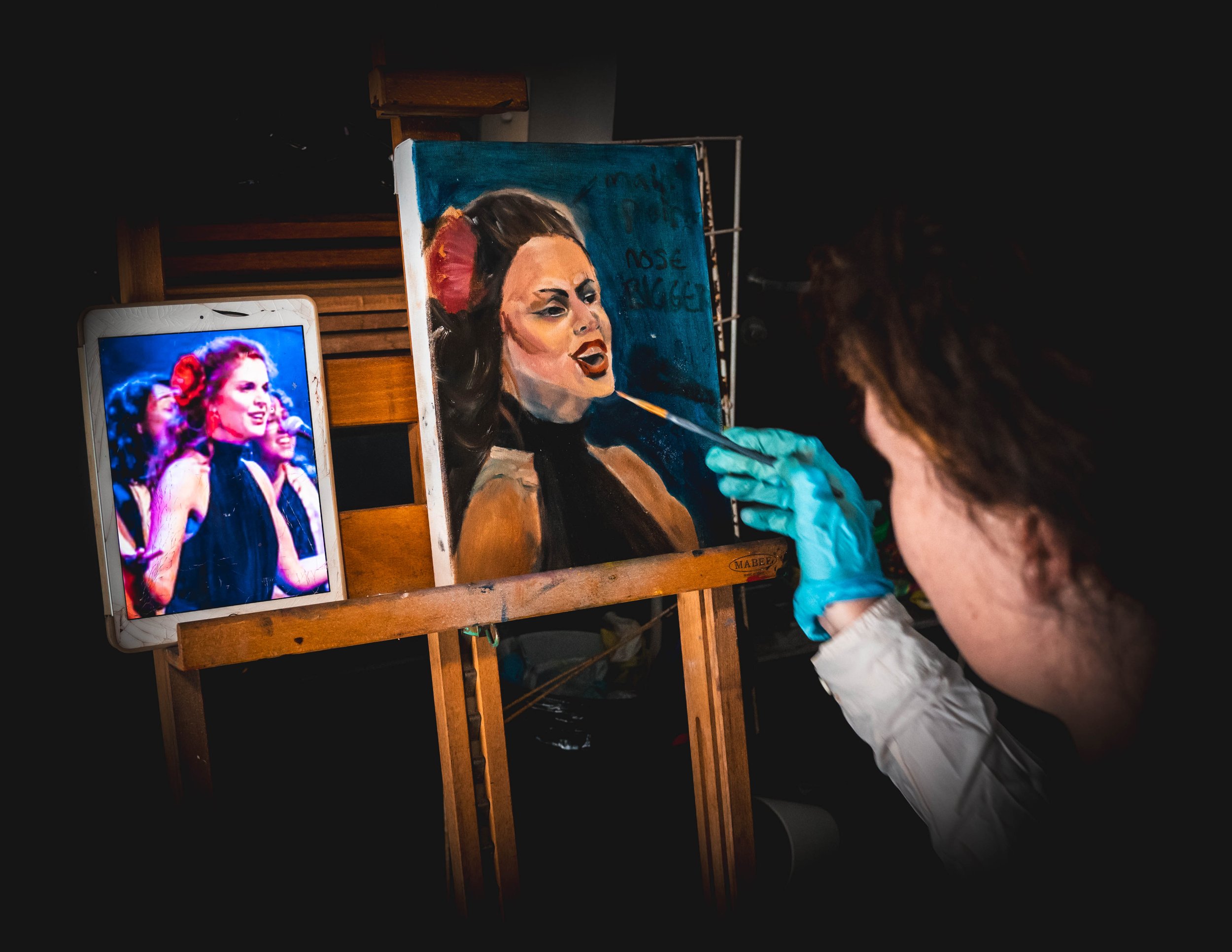
Art is a profound vehicle for learning not just about the world, but about ourselves. It invites us to move beyond surface-level understanding and into the depths of personal insight. Unlike traditional education, which often emphasizes external achievement and technical mastery, engaging with art encourages internal exploration. It asks us to be curious, reflective, and open to transformation.
When we create whether through painting, writing, music, or performance we begin to uncover the layers of our own experience. Each brushstroke or phrase becomes a way to process emotions, question beliefs, and make sense of our inner world. This is learning in its most intimate form: not the accumulation of facts, but the discovery of meaning. Through creative expression, we gain access to parts of ourselves that may otherwise remain hidden.
Art also teaches us how to learn through uncertainty. Mistakes become moments of insight. The process of trial and error mirrors the way we grow in life by experimenting, adapting, and persisting. In this way, art fosters resilience and nurtures a mindset that values exploration over perfection. It helps us understand that learning is not linear, but layered and evolving.
Self-discovery through art is both personal and relational. As we share our creative work and engage with others, we begin to see ourselves through new lenses. Dialogue around artistic expression deepens our understanding of different perspectives and strengthens our sense of identity. We learn not only who we are, but how we connect with the world around us.
Ultimately, the journey of learning through art is holistic. It engages our minds, bodies, and emotions, offering a space where growth and transformation can unfold naturally. Each creative act becomes a step toward greater self-awareness, clarity, and purpose. By embracing art as a path to learning, we open ourselves to the possibility of becoming more fully who we are.

Add your first comment to this post